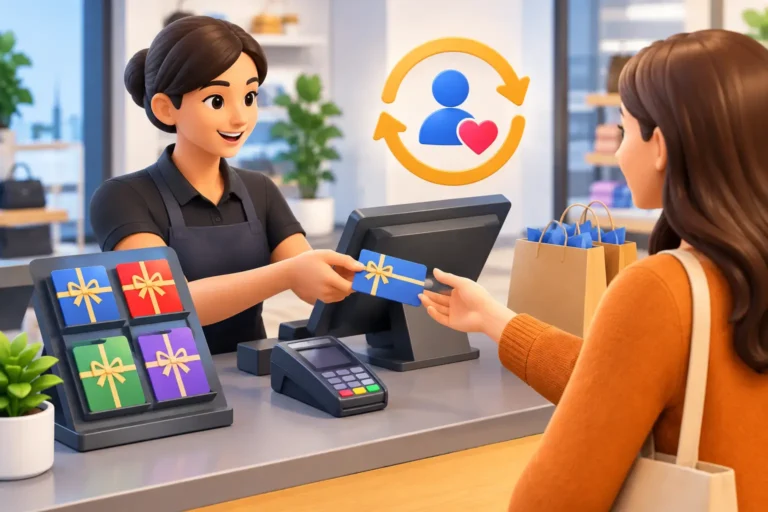
A customer walks in with a gift card they received three months ago, buys more than the card’s value, and leaves with a reason to return. That is the everyday value of retail POS gift cards when they are built into the checkout system your staff already uses. They are not just plastic cards by the register. Managed well, they create prepaid revenue, introduce new shoppers to your store, and give regular customers an easy way to recommend you.
For independent retailers, liquor stores, specialty shops, and service businesses, the details matter. A gift card program has to be easy to sell, fast to redeem, accurate in reporting, and supported when a card will not scan during a busy shift. The right POS setup makes those tasks routine rather than another source of work for the owner.
Why Gift Cards Work for Local Retailers
Gift cards remove the guesswork for the person buying a present while preserving choice for the recipient. A customer may not know which bottle, accessory, service, or product line their friend wants. They do know where that person likes to shop. A card lets them give a useful gift while directing spending to your business.
The benefit does not end with the initial sale. Gift card recipients are often first-time visitors. If the experience is friendly, checkout is quick, and inventory is available, that visit can become a repeat relationship. Recipients also frequently spend beyond the remaining card balance. That additional purchase is not guaranteed, but it is a common advantage of a well-run program.
Gift cards can also support practical seasonal promotions without requiring a complicated discount strategy. Holiday shopping, graduations, employee recognition, birthdays, and local fundraisers all create natural opportunities. A retailer can keep the offer simple: sell a card, load a value, and let the customer choose when to use it.
What Retail POS Gift Cards Need to Do at Checkout
The first requirement is straightforward: staff should be able to sell, activate, reload, check balances, and redeem cards from the same POS screen used for normal transactions. If employees must use a separate website, terminal, or paper log, errors become more likely and lines get longer.
A good retail POS gift card program records each transaction automatically. When a $50 card is sold, the system should recognize it as a gift card liability rather than ordinary product revenue. When the card is redeemed, the balance should decrease correctly and the sale should appear in the appropriate reporting. Your accountant may set specific procedures for your business, but the POS should provide clean, dependable records to work from.
Balance lookup is equally important. Customers expect a cashier to answer a balance question quickly, whether the card has a barcode, magnetic stripe, printed number, or digital code. Your team should also have a clear process for cards that are damaged, lost, or partially used. The policy is your decision, but staff need the tools and training to follow it consistently.
Physical, Digital, or Both?
Physical cards remain a strong choice for many local businesses. They are easy to display near the counter, easy to wrap as a gift, and familiar to customers who prefer an in-store purchase. For liquor stores and specialty retailers, a branded card can keep the business visible in a customer’s wallet long after the original visit.
Digital gift cards add convenience, particularly for last-minute gifts and customers who live outside your immediate area. They can be delivered by email or text, depending on the platform, and they reduce the need to keep preprinted cards in stock. The trade-off is that the purchase and redemption process must be clear. If customers cannot find the digital card, cannot open it, or are uncertain whether it was delivered, your staff becomes the help desk.
Many businesses benefit from offering both options. The better choice depends on how your customers shop, whether you have online ordering or e-commerce needs, and how well the gift card platform connects with your POS. A separate digital program that cannot be reconciled with in-store transactions can create more trouble than convenience.
Integration Is More Valuable Than a Standalone Card Program
Gift cards are most useful when they are part of a connected retail system. Your POS, payment processing, customer records, inventory, reporting, and loyalty tools should work together where it makes business sense. This gives owners a clearer picture of gift card sales, redemptions, outstanding balances, and customer activity without compiling numbers from several systems.
For example, a retailer may want to see whether gift cards sell primarily in December, whether recipients return within a certain period, or which store location redeemed a card. A multi-location business may need cards purchased at one site to work at another. These are not advanced extras for every merchant, but they are worthwhile questions before choosing a platform.
Integration also protects the checkout experience. When the POS recognizes gift cards as a supported tender type, employees do not need to improvise. A split payment becomes simple: apply the remaining gift card balance, then charge the difference to cash, card, or another approved payment method. That consistency helps prevent pricing mistakes and makes training easier for new employees.
Security, Policies, and Reliable Records
A gift card represents stored value, so it deserves the same operational care as other payment activities. Use cards and gift card services designed to work with your payment environment. Limit access to voids, refunds, manual card entry, and administrative changes based on each employee’s role. Review transaction reports regularly, especially if you notice repeated balance inquiries, unusual reload activity, or manual adjustments.
Your written policy should answer practical questions before they arise. Will cards expire? Are they reloadable? What happens if a customer loses one? Can they be used for all products and services? Are refunds issued back to the card? State and federal rules can affect expiration dates, fees, and disclosures, so confirm the requirements that apply to your business and location before publishing terms.
Keep the policy concise and visible. Fine print does not replace clear communication at the point of sale. A cashier who understands the policy can solve most customer questions quickly and avoid turning a small issue into a negative experience.
Reporting That Helps You Make Decisions
Gift card reporting should do more than show a total dollar amount. Owners should be able to distinguish cards sold from cards redeemed, see outstanding balances, and review activity by date, employee, register, or location when needed. Those records support daily reconciliation and help identify discrepancies before they become difficult to investigate.
Reporting also helps with planning. If gift card purchases rise before major holidays, you can order enough card stock, schedule staff appropriately, and prepare displays ahead of time. If redemptions create demand for a certain product category, your inventory plan can reflect that pattern. The POS will not make those decisions for you, but it should give you usable information rather than a stack of disconnected reports.
Choosing a POS Partner, Not Just a Gift Card Vendor
A low-cost gift card offer can look attractive until it requires separate processing, manual reporting, limited support, or a replacement system a year later. Price matters, especially for local businesses managing tight margins. It should be weighed against installation, staff training, hardware compatibility, processing requirements, reporting capability, and the availability of real support when you need it.
Ask a potential provider to walk through the complete transaction flow. See how a card is activated, how a partial redemption works, how a balance is checked, and how a mistake is corrected. Ask how cards function during an internet interruption, whether they work across locations, and who answers when the register does not behave as expected on a Saturday afternoon.
That last question deserves attention. A gift card program is only as dependable as the checkout system behind it. A turnkey POS provider can configure the system for your workflow, install the hardware, train the people using it, and remain accountable after go-live. For businesses across Northern Colorado, Run PC can help evaluate POS, payment processing, gift card, inventory, and support needs as one working solution instead of a collection of disconnected services.
Start With the Customer Experience You Want
The best gift card program does not need to be complicated. It should make it easy for a customer to give your business, easy for a recipient to spend with you, and easy for your staff to manage the transaction correctly. Start with the experience at the counter, then choose the POS tools, card format, reporting, and support structure that can deliver it reliably.
When a gift card turns a thoughtful purchase into a smooth return visit, it has done more than process a payment. It has given your business another chance to earn the customer’s trust.
